Bending Rules of Physics: The Magnus Effect and the Perfect Curve
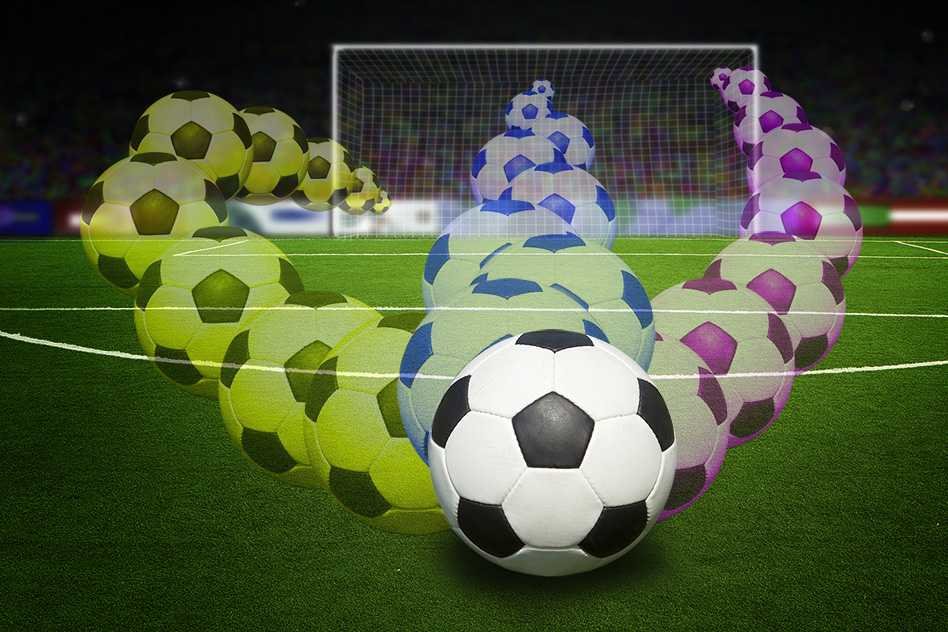
The sight of a ball swerving around a wall and into the top corner is one of football's greatest spectacles. While fans call it magic, physicists call it the **Magnus Effect**. Mastering the "curve" is a prerequisite for any elite set-piece specialist. SJ Sportsworld breaks down how you can use physics to beat the goalkeeper.
1. Anatomy of the Strike
To make a ball curve, you must strike it "off-center." Using the inside of your foot (the instep), you apply a force that isn't directed through the ball's center of gravity. This sets the ball into a rapid boundary-spin. For an inswinger, the ball must spin horizontally.
2. High Pressure vs. Low Pressure
As the spinning ball travels through the air, it carries a small layer of air with it (the boundary layer). - On one side of the ball, the spin is moving in the *same* direction as the oncoming air. This speeds up the air, creating a **Low Pressure** zone. - On the opposite side, the spin moves *against* the oncoming air, slowing it down and creating a **High Pressure** zone. According to Bernoulli's Principle, the ball is naturally pushed from high to low pressure, causing it to swerve in mid-air.
3. The Knuckleball Exception
Conversely, the "Knuckleball" (popularized by Cristiano Ronaldo) involves striking the ball with almost zero spin. In this state, the air hits the seams of the ball unpredictably. This cause the ball to "wobble" and drop suddenly bcause there is no stable Magnus Effect to guide its path. It is the more difficult shot for a keeper to read because the ball's trajectory changes three or four times during its flight.
Strategy for Professional Preparation
Success in professional football is achieved in the days leading up to the match, not just on game day. Proper nutrition, mental preparation, and gear maintenance are the pillars of a top-tier performance. At SJ Sportsworld, we emphasize that athletes must take a holistic approach to their development. This includes everything from the precision of their passing drills to the specific tension in their muscles during the pre-match warm-up.
Environmental adaptation is another critical factor. A striker playing in the humid conditions of South Asia must manage their hydration differently than a midfielder in the cool, crisp air of Northern Europe. Each condition demands a specific footwear configuration and a unique pacing strategy to ensure maximum efficiency over the full 90 minutes. Our experts are dedicated to providing the technical data needed to make these adjustments seamlessly.
Finally, we must look at the psychological resilience required of modern athletes. The ability to perform under the scrutiny of thousands of fans and the "omnipresence" of VAR cameras requires a level of mental toughness that is trained as rigorously as physical skill. Confidence in your equipment is the foundation of this mental state. Knowing your boots provide the perfect grip and your shin guards offer the ultimate protection allows you to enter the "zone" where instinctive brilliance happens.
SJ Sportsworld Professional FAQ
Q: How do environmental factors like humidity affect ball flight?
A: High humidity increases air density, which actually increases the amount of "swerve" you can generate on a curve ball. However, it also slows the ball down faster over long distances, requiring more force for long passes.
Q: What is the most durable material for modern football boots?
A: High-grade Microfiber or Polyurethane (PU) synthetics are the most durable in all weather conditions. While traditional K-leather offers better "feel," it requires far more maintenance and can soak up water in wet conditions.
Q: How should I properly care for thermally bonded balls?
A: Wipe them clean with a damp cloth after every session. Never use harsh chemicals or a wire brush. Store at room temperature to avoid making the bonded seams brittle in extreme cold or heat.